
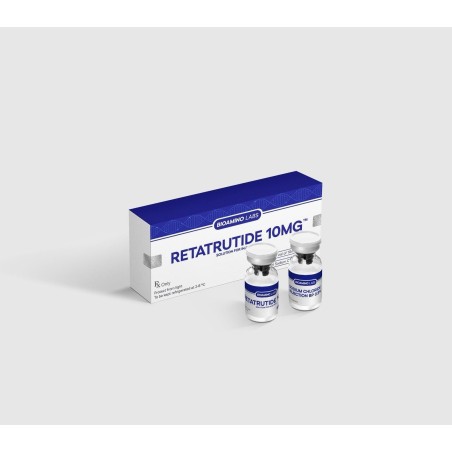
Bioamino Labs Retatrutide 10MG + water
SHORT OVERVIEW
- ✔️ Manufacturer: Bioamino Labs
- ✔️ Product Name: Retatrutide
- ✔️ Form: Lyophilized powder for reconstitution
- ✔️ Active Substance: Retatrutide (LY3437943)
- ✔️ Concentration: 10 mg/vial
- ✔️ Packaging: 10 mg vial + Bacteriostatic Water
PRODUCT DESCRIPTION
Retatrutide is based on the active ingredient LY3437943, a synthetic peptide with 39 amino acids developed by Eli Lilly. Unlike other GLP-1 agonists like Tirzepatide, which activate two receptors (GIP + GLP-1), Retatrutide targets three hormone receptors: GIP, GLP-1, and Glucagon receptors.
The primary function of Retatrutide is the simultaneous activation of these three receptors, leading to improved glycemic control, increased insulin production, and enhanced energy expenditure. This results in significant weight loss and metabolic parameter improvements.
Research use: Retatrutide is not yet FDA-approved and is for research purposes only. It is used worldwide in metabolic, endocrine, and receptor signaling studies.
Unique properties: Retatrutide is a synthetic peptide derived from a GIP backbone, containing non-coded residues (Aib2, Aib20, aMeL13) and C20 fatty diuret conjugation for stability and albumin binding.
RECOMMENDED DOSAGE
For research purposes: The dosage of Retatrutide depends on the specific research protocol. Clinical trials have investigated doses of 4-12 mg weekly.
Microdosing protocol: Some researchers use a microdosing approach, dividing the weekly dose into 2-3 smaller injections. Instead of 6 mg on Monday, 2 mg are administered every 2-3 days, which can reduce peak concentrations by 28-38% and potentially lessen nausea and gastrointestinal side effects.
Reconstitution: Retatrutide comes as a lyophilized powder and must be reconstituted with bacteriostatic water before use. For a 10 mg vial, 3 mL of bacteriostatic water is recommended to obtain a concentration of 10 mg/mL.
Dosing schedule: Due to its long half-life, weekly injections are sufficient to maintain stable blood levels. In microdosing protocols, injections can be spread over 2-3 administrations per week.
POSSIBLE SIDE EFFECTS
Based on clinical studies, Retatrutide may cause side effects, especially at higher doses. The most common include nausea, vomiting, diarrhea, and abdominal pain.
Other possible side effects include headaches, dizziness, fatigue, and increased sweating. Some participants experienced loss of appetite and dehydration.
Since Retatrutide activates glucagon receptors, it may lead to increased heart rate and slight elevation in blood pressure. People with cardiovascular conditions should exercise caution.
As Retatrutide is not yet approved for human use, long-term safety data are lacking. Researchers should carefully consider potential risks.
STORAGE
- Store lyophilized powder at -20°C to -80°C.
- Protect from light.
- Keep in its original packaging.
- Store reconstituted solution in the refrigerator at 2-8°C.
- Keep out of reach of children.
Reviews
There are no reviews yet.